
What Does It Mean to Treat the Cause, Not Just the Problem?
When a tooth chips, a filling breaks, or a crown needs replacing, the immediate question is usually, “How do we fix it?” That is an important question, but sometimes we first need to ask why it happened.
Repairing the damage may solve the immediate problem. Understanding what contributed to it can help us make a more thoughtful decision about what comes next. At Parker & Pennington Dentistry, that means looking beyond one tooth and considering how your teeth, gums, bite, existing dental work, habits, and overall health fit together.
Sometimes a Broken Tooth Is Just a Broken Tooth
Not every dental problem has a complicated underlying cause. You might bite down on something hard and unexpectedly chip a tooth. An older filling may simply reach the end of its useful life. Decay may develop in an area that is difficult to keep clean. In those situations, treating the immediate problem may be exactly what is needed. When we see repeated damage, unusual wear, or several concerns developing together, it makes more sense to look a little deeper.
Your Teeth Leave Clues
The condition of your teeth can tell us quite a bit about the forces and conditions they experience every day. For example, worn or flattened areas may lead us to look more closely at how your teeth come together. Repeated chips or fractures may raise questions about where biting forces are concentrated. If a restoration keeps failing, we want to understand whether something besides the restoration itself could be contributing.
Your gums provide information too. So do missing teeth, areas of recession, changes in your bite, and the condition of older dental work. None of these clues automatically points to one diagnosis. They simply help us know which questions are worth asking.
Why Your Bite Can Be Part of the Conversation
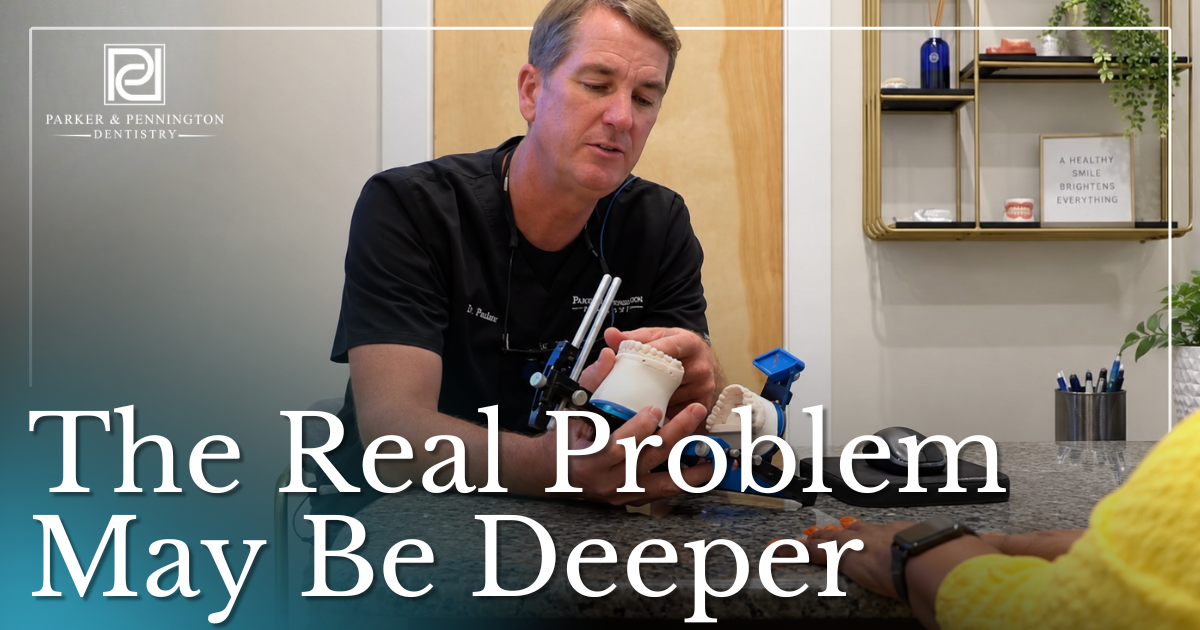
Your teeth are made to work together. When you bite and chew, those forces are distributed across them. If those forces become concentrated in certain areas, some teeth or restorations may be asked to handle more than others. That is why evaluating your bite can matter, even when you came in for one specific tooth.
Looking Beyond the Mouth
Sometimes understanding the cause also means talking about things that may not seem directly related to dentistry. Your health history, medications, diet, daily habits, and changes in your overall health can provide useful context. Even something as simple as how and when a problem began may help us understand what has changed.
This is one reason we value conversation so much. We need to know if you have noticed something different. We want to know about your history. We need to know your oral health goals.
Treating the Cause Does Not Always Mean More Treatment
Looking for an underlying cause is not about finding more things to treat. In some cases, what we learn may support a conservative approach. We may decide to monitor something, make a small adjustment, change a daily habit, or simply watch an area more closely over time.
In other situations, understanding the bigger picture may change the way we restore a tooth or help us develop a more comprehensive plan. Either way, the purpose is the same: to recommend the amount of dentistry that makes sense for you.
A Better Question Can Lead to a Better Plan
When something goes wrong with a tooth, repairing the damage matters, but when appropriate, asking why it happened can give us information that helps us think beyond today’s problem. At Parker & Pennington Dentistry, we believe treatment decisions should be collaborative. We will explain what we see, what we think may be contributing, and what options are available. Then we can decide together what makes sense for your health, goals, budget, and future.
If you have a dental problem that keeps returning or you would like a more complete understanding of what is happening in your mouth, schedule an appointment at Parker & Pennington Dentistry located in St. Marys, GA.